
Individual residencies / Andorra
JEAN-MICHEL JOHNSTON
From Tuesday, 7 April 2026 to Friday, 24 April 2026
Bio
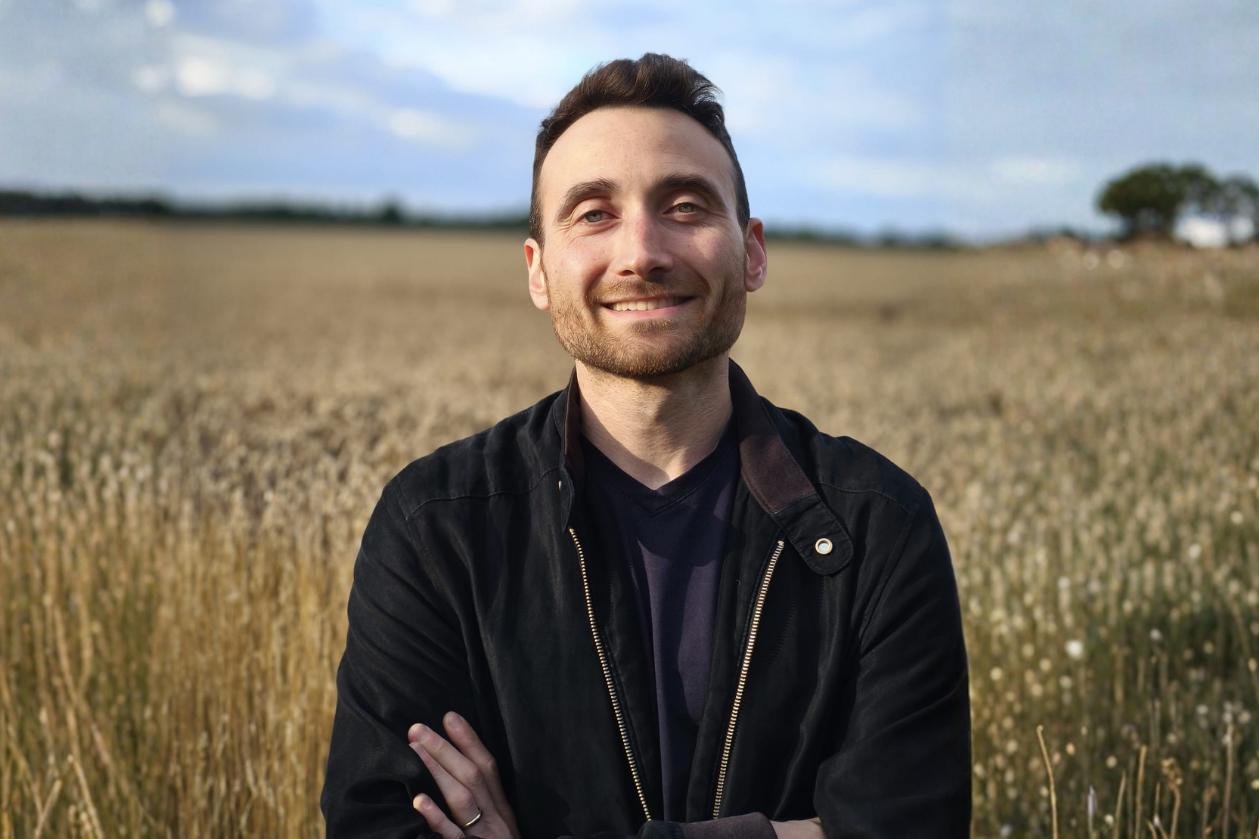
Jean-Michel Johnston is Associate Professor of Modern European History at Fitzwilliam College, University of Cambridge. Born in London, he received his academic training in Great Britain and France. He obtained his PhD from the University of Oxford in 2017, where he subsequently worked as a postdoctoral researcher on the project “Diseases of Modern Life” (2017–2019), funded by the European Research Council (ERC), before joining the University of Cambridge. During the summer semester of 2019, he was a visiting professor at Justus Liebig University Giessen.
His previous research has focused on state formation and the communications revolution in nineteenth-century France and Germany. His first book, Networks of Modernity: Germany in the Age of the Telegraph, 1830–1880, was published in 2021 by Oxford University Press. He has also researched the diaspora in the modern era, on which he has published several works. His current research project explores sovereignty from a European historical perspective, with particular attention to small states.
Project
“Against All Odds. The Defiant History of Europe’s Smallest States, 1789-Present”
During the residency, he will carry out research aimed at the publication of a book that analyzes modern European history from the perspective of four microstates: Andorra, Liechtenstein, Monaco, and San Marino. His research so far has made use of materials available in libraries and archives accessible in the UK, Vienna, and Liechtenstein, as well as online. Taking advantage of his stay in Andorra, he will deepen this research by consulting holdings at the National Library and the National Archives of Andorra, as well as visiting key sites and museums in the country, with the aim of completing the full draft of the manuscript.
In many exciting and unexpected ways, the Faber Andorra residency was exactly what I needed to enrich and make progress on my research project—a history of Europe’s smallest states (Andorra, Liechtenstein, Monaco and San Marino). As a historian, I am used to rather solitary research trips: time spent in archives, scouring through records and poring over documents to decipher sometimes illegible handwriting, then drawing up notes in the evening to pull together my impressions of the day. But much like my initial journey into Andorra itself, the residency actually turned into a voyage of discovery. Like the road which passes through a deep gorge around Sant Julià de Lòria in the south, opens up onto the wider valley of Andorra-la-Vella, and proceeds to twist and turn around rivers and mountains through the towns and villages that lie beyond, my time in Andorra was full of fascinating encounters with the country’s past and present at every turn.
During the two and a half weeks that I was based in La Massana, I made many productive visits to the National Archives, where everyone was welcoming and extremely helpful in orienting my search for the documents I needed to complement my reading of Andorran history. Thanks to the contacts facilitated by the organisers of Faber Andorra I also met many people in diverse fields, in academia, in museums, in the media and in public life. Conversations with individuals from across society allowed me better to understand how past and present, the rural and the urban are intertwined here, how Andorra is changing today, and the questions people have about the future. In my free time, I was also able to visit many different sites in the country—from the impressive Casa d’Areny-Plandolit in Ordino to the calm atmosphere of the sanctuary of Meritxell—which testify to the country’s rich and multifaceted history. The opportunity also to discover the country’s wonderful natural environment provided me with the energy needed to then return to my writing in a more focused way.
